

Alberto Castañeda Mondragón came to the United States legally in March 2022 on a temporary work visa. He found jobs as a driver and roofer. He sent money home to support his elderly, disabled father and his young daughter in Veracruz, Mexico. He was trying to survive the way millions of immigrant workers do, quietly and without drama.
On January 8th in suburban Minneapolis, that ordinary life ended.
Castañeda Mondragón says Immigration and Customs Enforcement officers surrounded the car he was riding in outside a St. Paul shopping center, smashed the windows, dragged him out, threw him to the ground, handcuffed him, and immediately began beating him. He remembers punches. He remembers his head being struck repeatedly with a steel telescoping baton. He remembers being hauled into an SUV and taken to a detention facility, where he says the beating continued.
By the time he reached the Hennepin County Medical Center, he had eight skull fractures and multiple life-threatening brain hemorrhages. Eight. Not one. Not two. Eight. His brain was bleeding in several places. Doctors described him as disoriented and minimally responsive. He spent days unable to form coherent memories.
The injuries were so severe that when hospital staff finally handed him his phone, he spoke to his daughter and did not recognize her.
“I am your daughter,” she had to tell him.
He had forgotten her.
He had forgotten teaching her how to dance when she was five years old. Forgotten birthday parties. Forgotten the day he left for the United States. These are not abstract losses. These are the pieces of a human life that violence erased.
ICE officers told hospital staff a very different story. They claimed Castañeda Mondragón had “purposefully run headfirst into a brick wall.”
Medical professionals immediately doubted that explanation. A CT scan showed fractures to the front, back, and both sides of his skull. Doctors told reporters those injuries were inconsistent with a fall or someone running into a wall. An outside physician reviewed the case and said the same. Nurses who treated him said the pattern of trauma looked like a beating.
Castañeda Mondragón himself says there was never a wall. He says ICE officers struck him with the same metal baton they used to break the windows of the vehicle.
Law enforcement policies across the country are explicit about this. Batons are meant for arms, legs, and the body. Striking the head, neck, or spine is considered potentially deadly force. Use of a baton to the head is only justified when the situation is so extreme that lethal force would otherwise be authorized.
Castañeda Mondragón was handcuffed.
He was not presenting a lethal threat.
Yet his skull was shattered.
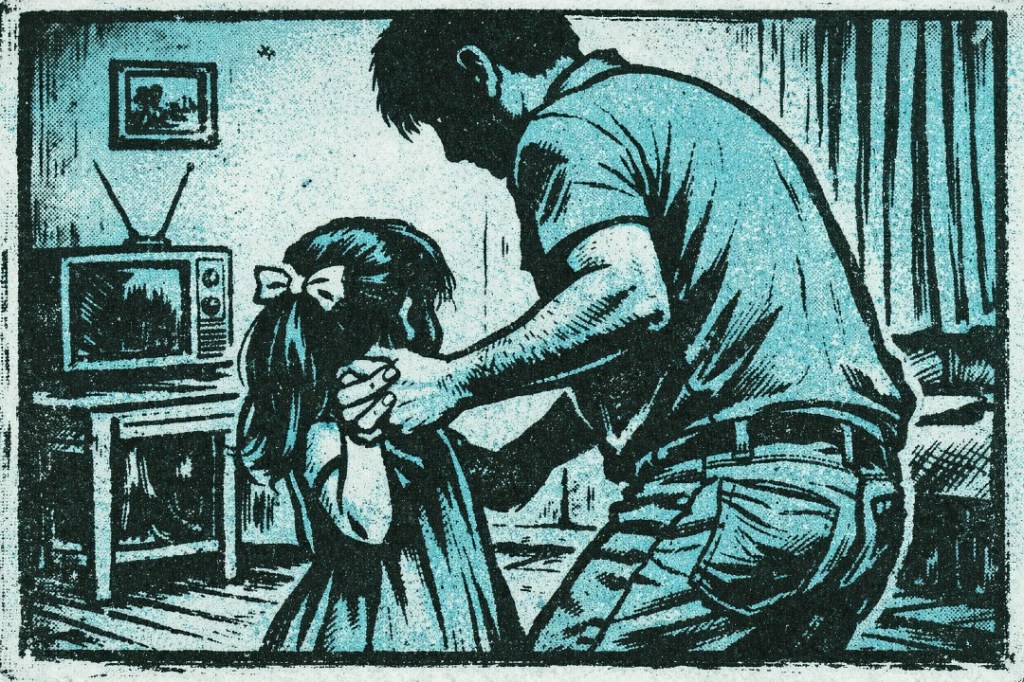
This kind of lie is not new. It is the same script abusive parents use when they bring battered children to emergency rooms. The kid fell out of bed. The kid hit their head on furniture. Back when I wrote about child abuse, we used to call those parents ‘Breeders,’ and their stories were always the same. Deflect. Minimize. Pretend the injuries just happened.
Now federal agents are using the same excuses.
During his hospitalization, ICE officers stood guard over him. At least one officer reportedly told hospital staff that Castañeda Mondragón “got his [expletive] rocked.” Meanwhile, caregivers documented swelling, bruising, bleeding, and catastrophic head trauma. Minnesota law requires medical professionals to report injuries that may be the result of a crime. Whether that happened remains unclear.
A video posted to social media shows Castañeda Mondragón stumbling through a parking lot in handcuffs, barely able to stand as masked officers escort him. A bystander can be heard saying, “Hope they don’t kill you.” Another shouts that they gave the man a concussion.
ICE later acknowledged that Castañeda Mondragón had entered the United States legally and that only after his arrest did they determine he had overstayed his visa.
That matters.
Because despite the endless political theater about the southern border, visa overstays are the leading reason people become undocumented in this country. Not dramatic crossings. Not caravans. Paperwork lapsing while people are already here, working and living.
A federal judge eventually ruled Castañeda Mondragón’s arrest unlawful and ordered his release.
By then, the damage was done.
We still do not know who the ICE agents were who beat him. Their names have not been released. Their faces were masked. There has been no public accounting of who struck the blows that fractured his skull. There is no indication that any of them will ever see the inside of a courtroom, let alone a jail cell. History suggests they will not.
Castañeda Mondragón now struggles with balance and coordination. He cannot climb ladders, which means he cannot do roofing work. He needs help bathing. He has no health insurance. He relies on coworkers and community members for food, housing, and medical care. He lives in fear that ICE will come for him again. He is afraid to leave his apartment.
His daughter calls daily, trying to help him rebuild memories that should never have been taken from him.
This is what unaccountable force looks like. A man beaten into amnesia. A government agency offering fairy tales about walls. Medical professionals quietly saying the injuries tell a different story. Agents whose identities remain hidden. Accountability that may never come.
And here is the part people need to understand.
If one of us does not have rights in America, then none of us do.
If federal agents can smash windows, crack skulls, lie about it, and disappear behind masks and bureaucracy because their victim is an immigrant, then the protections everyone assumes they have are just decoration. Today it is Alberto Castañeda Mondragón. Tomorrow it can be anyone who falls on the wrong side of power.
He survived. That is being framed as luck.
But survival is not justice.
Justice would mean accountability for the people who beat a handcuffed man until his daughter disappeared from his memory.
(Source)


 Old Man Trench
Leave a comment