

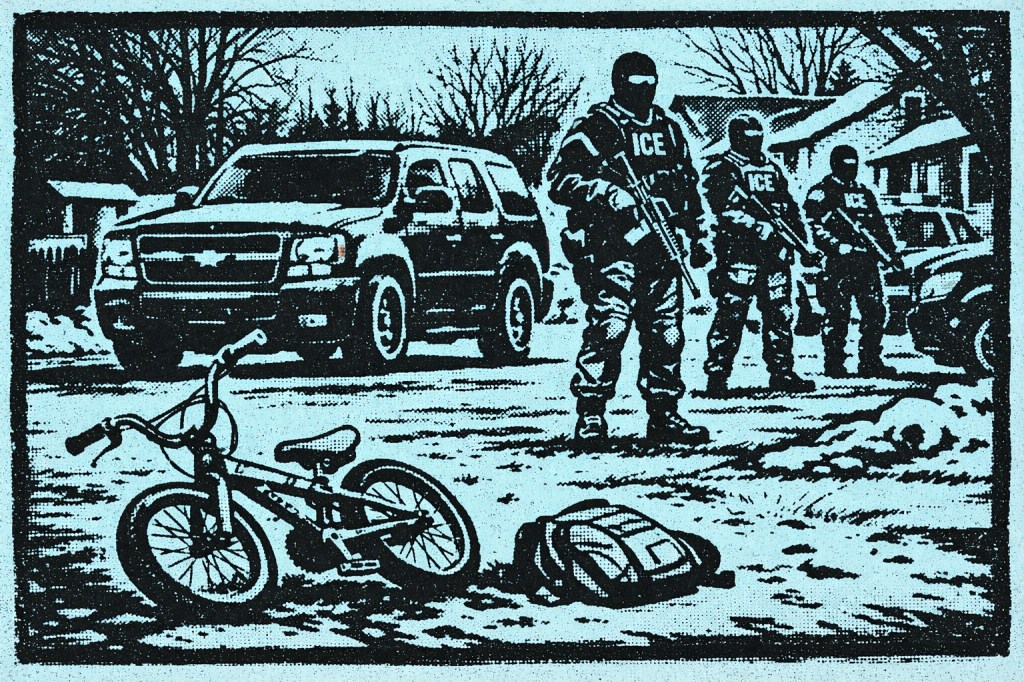
Border Czar and $50,000 Man Tom Homan has declared that ICE activity in Minnesota is over. Operation Metro Surge, the massive immigration enforcement dragnet that sent thousands of armed federal agents into the Twin Cities and all across Minnesota, was coming to an end. More than 4,000 arrests, he said. Safer streets, he said. A victory, he said. But “safer for whom?” Because if safety is measured by peace in the neighborhoods that were turned into a federal occupation zone, then the scorecard looks disturbingly one-sided.
The Trump administration has branded this sweep “the largest immigration enforcement operation ever,” and Homan is still clinging to the idea that it “left Minnesota safer.” But what does that mean when two U.S. citizens were shot dead by federal agents and there has been no public accountability?
The videos of Renee Good’s killing show a 37-year-old mother of three gunned down by an ICE officer in early January. Officials spun stories about threats and danger, but independent analyses and eyewitness accounts told a starkly different story. There have been no arrests in her death, no criminal charges for the agent who pulled the trigger, and crucial investigative details remain withheld from the public and local authorities.
Days later, Alex Pretti, a 37-year-old intensive-care nurse with no criminal record, was also shot and killed by federal agents during a protest over Good’s death. Multiple federal officers shot Pretti in the back after he had been disarmed, and the identities of the shooters were not initially made public. There’s been no transparent investigation that satisfies basic standards of justice. These two deaths aren’t footnotes; they are pivotal crimes that punctuated an enforcement strategy now being heralded as a success.
And what of the 4,000 people rounded up across Minnesota? Homan’s tally doesn’t come with a breakdown of how many were truly dangerous or even had criminal convictions. We still don’t know how many were snagged on questionable warrants, how many were rounded up to sustain a quota, and how many were torn from families without cause. Children were among those detained. 5-year-old Liam Conejo Ramos, terrified and confused, was held with adults as part of the sweep. That child’s presence in federal custody should trouble any authority that claims this was about public safety.
And beyond the arrests, there is the question of legitimacy. The feds claim they are still seeking roughly 16,840 people in Minnesota with final orders of removal, meaning this “drawdown” Homan announced does not end enforcement, it merely shifts its posture. How many of those individuals are lawful residents engaged in the immigration process? How many are people with U.S. citizen children, work permits, or pending cases? That data has not been disclosed. Instead, the narrative remains focused on raw numbers and bold claims of safety, while the human wreckage goes mostly uncounted.
But the true cost of Metro Surge isn’t just in headlines or arrest logs. It’s in the fear that settled over immigrant neighborhoods, the shuttered businesses and empty church pews, the students who stayed home because there were masked agents on their streets. Mothers pulled their children from schools, local economies flatlined, and communities were left under siege. Long after federal agents depart, the psychological and economic trauma will linger. And for families mourning Renee Good and Alex Pretti, no “drawdown” offers any relief.
Homan says the operation made Minnesota safer. But safer for whom? Not the parents too afraid to send their kids to class. Not the business owners counting lost revenue. Not the advocates who watched unarmed neighbors die at the hands of the very officials sworn to protect. And certainly not the families still waiting for answers about how Good and Pretti were killed, and why no one has been held to account. That is the real crime here, not that Metro Surge ended, but that, for too many people, the violence, fear, and unanswered questions remain.
(Source)




 Old Man Trench
Leave a comment