


Hill Country College Preparatory High School near Bulverde, Texas, is now part of a list that continues to grow, no matter how often people insist it shouldn’t.
This past Monday morning, a 15-year-old student walked into the school just before the start of the day carrying a .357 magnum revolver he had taken from home. He went to a second-floor classroom and opened fire, striking a teacher. Before anyone could react, the student turned the gun on himself and died at the scene.
Authorities have not publicly identified either the teacher or the shooter. They have also not established what, if any, relationship existed between them. Investigators are still working to determine whether the teacher was specifically targeted or simply the first authority figure the student encountered.
The teacher survived, but survival in cases like this needs to be defined. Authorities say she is conscious, but at this point she can only communicate by squeezing hands. When we think of survival, we sometimes want to think the victim only received a flesh wound, but that is often hardly the case.
The school went into lockdown, and students were later bused to a nearby middle school to be reunited with their families. Parents stood in long lines, many of them calling their children even though they knew students were not supposed to be using their phones.
Under Texas law, students are restricted from using electronic devices during the school day. That policy collided head-on with reality in the middle of a shooting, when phones became the only way for students to tell their parents they were alive or to figure out what was happening around them. Maybe when states like Texas can guarantee that guns will stop showing up in classrooms, then the conversation about restricting phone use can take priority. Until then, those phones are doing more to keep kids connected in a crisis than any rule is.
The student used a .357 revolver. Between this shooting and the Evergreen High shooting, are revolvers becoming the new “in” firearm for school shooters? Are they the new gun for ‘hipster’ school shooters? “Oh, you used an AR-15. How pedestrian. I used a .357.”
Of course, I’m being facetious, but the focus in public debate can focus too heavily on certain types of guns that it overlooks a simpler truth. If a teenager has access to a gun, the type of firearm becomes secondary to the fact that access to a gun existed in the first place.
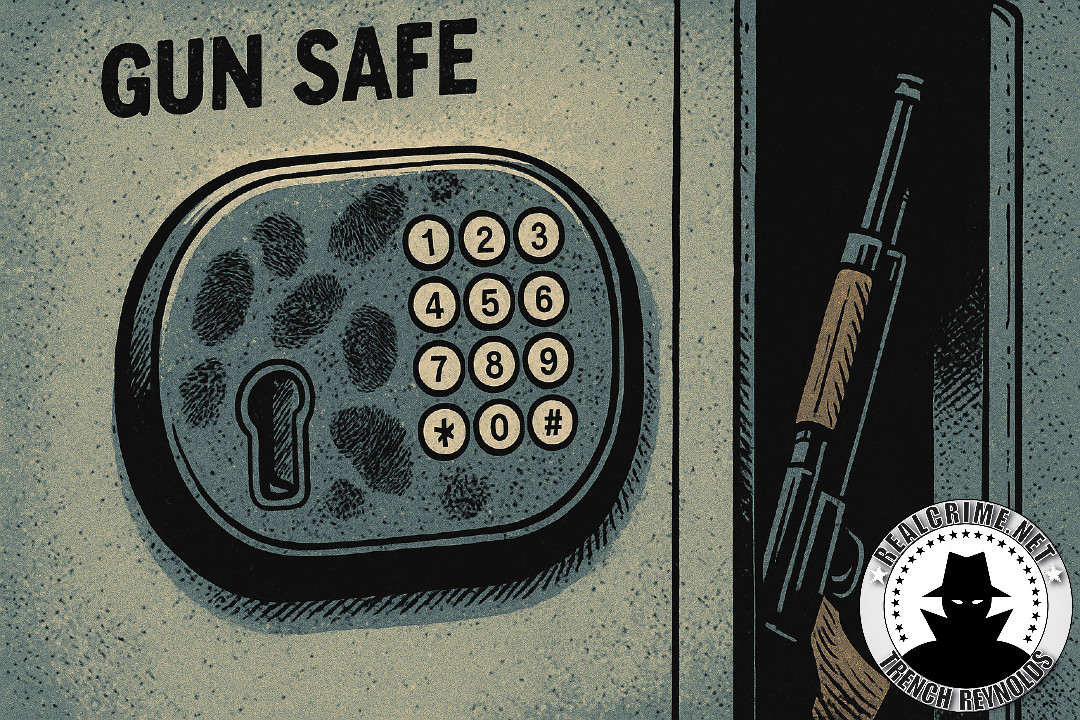
And once again, the gun came from home. It must belong to a family member and have been stored in a place where a 15-year-old could get it, carry it out of the house, and bring it into a school.
Maybe it was treated like just another possession in the house or even like another family heirloom passed down without much thought to who else could access it. The sheriff has said that when a firearm is left unsecured and a child gains access to it, the owner could face charges under Texas law. The word “could” pisses me off here because the laws exist, but the follow-through hasn’t been consistent. Again, I have to bring up last year’s shooting at Evergreen High School in Colorado. In that case the shooter brought a gun that was considered a ‘family heirloom.’ Yet no charges were ever filed against the family.
There was no School Resource Officer on campus at the time of the shooting. It is a cheap point to focus on because it suggests a visible gap in security. At the same time, it risks distracting from the larger issue. Even if an officer had been present, the student still would have arrived at school with a loaded revolver, still would have made it into the building, and still would have been able to fire before anyone could respond. The presence of an SRO might have shortened the timeline, but it would not have prevented the initial act. Studies have repeatedly shown that these officers are part of a response strategy, not a solution to the underlying problem.
Investigators have pointed to the possibility that the student was struggling academically and failing several classes. That detail is already being used as an early explanation, but it is not a sufficient one. Academic problems are common, and they do not lead most students to commit acts of violence. What it does suggest is that there may have been a larger set of issues at play, something that investigators are now trying to piece together through electronic evidence seized from the student’s home. As in so many of these cases, the real story will likely emerge after the fact, when it no longer has the power to prevent what has already happened.
In the political response, Texas Sen. José Menéndez (D-San Antonio) made a statement that stood out for its directness. He said…
“School shootings should not be constant ‘news of day,’” he wrote. “We cannot pick and choose WHEN we are pro life! We have to ACT! I’m asking all of my colleagues to prioritize common sense gun control legislation!”
In a state where the default response has often been limited to expressions of thoughts and prayers, even that level of urgency feels notable. Whether it translates into anything concrete is another matter entirely.
There was also a moment of unexpected restraint in media coverage. The New York Post reported on this shooting without immediately trying to label the shooter as transgender. Will wonders never cease? That shouldn’t sound like a compliment, but for the New York Post, that’s damn near a Pulitzer.
When all the puzzle pieces are put together, the image of what happened becomes difficult to ignore. A teenager had access to a firearm at home and took it into school, where he was able to shoot a teacher before anyone could intervene. The teacher was critically injured, and the shooter ended his own life. The community is left to deal with the aftermath, while investigators work backward to explain a chain of events that, at its core, is not particularly mysterious.
This is another school shooting in Texas. It follows the same pattern seen time and again. They have different names and locations but the same perfect storm of failures. The conversation will move on to recovery, to counseling, to security measures, and to political debate. Meanwhile, the most important question remains the same as it has been in so many cases before.
How did a 15-year-old get his hands on a gun in the first place?
(Sources)
- Parents, student express safety concerns after student shoots teacher at Comal ISD campus
- 15-year-old dead after shooting teacher at Texas high school, officials say
- What we know about the deadly shooting at Hill Country College Preparatory High School near Bulverde
- Gun used in Bulverde school shooting was a revolver 15-year-old student brought from home
- No security officer was on campus during Bulverde school shooting

Leave a Reply