


As most of you may already know, on March 30, a 15-year-old student walked into Hill Country College Preparatory High School near Bulverde, Texas, carrying a .357 revolver. He went to a second-floor classroom, shot a teacher, and then turned the gun on himself. The teacher survived and is reported to be in stable condition. The student did not.
That much is clear.
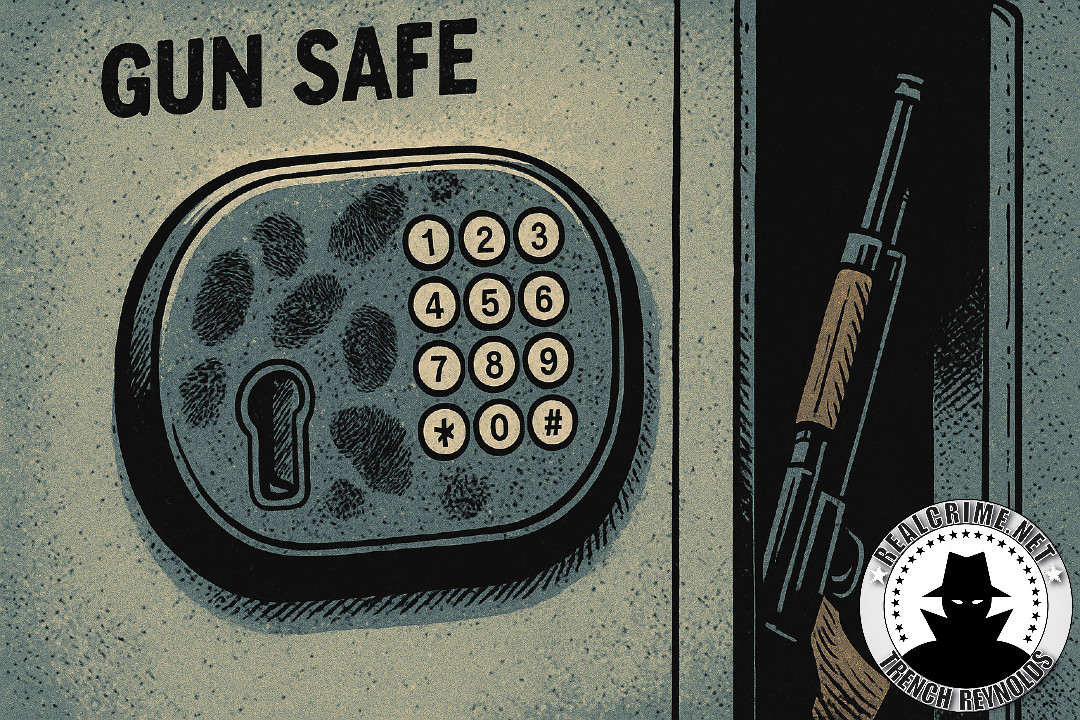
What is also clear, and what should matter just as much, is where the gun came from. It belonged to the boy’s grandfather, and investigators have said it was accessible inside the home. Not secured in a way that prevented access. Not locked up to the point where a teenager could not get to it, but accessible.
In other words, a 15-year-old knew where a firearm was, was able to retrieve it, and was able to leave the house with it.
However, we are still being told that officials are “piecing things together,” as if the central issue is buried somewhere deep in a pile of evidence waiting to be uncovered.
We are also being told that there was no personal relationship between the shooter and the teacher. That statement is being presented as a meaningful detail, but it raises more questions than it answers. What does that actually mean in practice? Does it mean the teacher was simply the first authority figure he encountered that morning? Does it mean there was no specific grievance, no prior interaction, or no identifiable motive tied to that individual?
If anything, that makes the situation more troubling, not less. It suggests that the act did not require a personal conflict. It only required opportunity.
And that opportunity existed because the student had access to a gun.
Meanwhile, the public conversation is already shifting in a familiar direction. There is renewed debate about the absence of a school resource officer at the time of the shooting. The timeline is being dissected. The officer was scheduled to be on campus at 8:55 a.m., while the shooting occurred at approximately 8:34 a.m. This gap is now being discussed as if it is a critical failure point.
It’s not.
It’s, at best, a secondary issue.
The presence of a school resource officer might have changed the response time. It might have shortened how long the situation lasted. It might have altered what happened after the first shot was fired.
It would not have prevented the student from arriving at school with a loaded revolver in the first place.
That leads to a much more basic question that tends to get overlooked in these discussions. Why do schools have school resource officers at all? They are not there to monitor hallway etiquette or break up arguments about cafeteria seating. They are there because there is a recognized risk that students may bring weapons, including firearms, onto campus.
And why is that risk there?
Because students continue to have access to guns.
You can adjust schedules. You can increase security budgets. You can even assign more personnel and extend coverage earlier into the morning. All of those measures operate on the assumption that the threat is already in motion. None of them address how the threat begins.
In this case, the threat began at home.
That is not an especially complicated chain of events, despite how often it is treated like one. A firearm was present in the home. It was not secured in a way that prevented access. A teenager was able to take it.
This happened in Texas, the school shooting capital of the world. That is not because of some mysterious cultural anomaly. It is because access to firearms is widespread and often treated too carelessly, even in households with children.
Which brings us back to the grandfather.
How hard is it to lock up your fucking guns when there are kids in the house?
This is not a complex problem. It does not require advanced training or specialized knowledge. It requires a basic understanding that a firearm is not just another household item like a toaster. It requires taking a minimal step to ensure that it cannot be accessed by someone who should not have it.
As someone who is at grampa age, I can say this with some authority. If you are old enough to be a grandfather, you are old enough to understand responsibility. If you choose not to secure your firearms, then perhaps the conversation should shift to whether you are capable of handling that responsibility at all. Essentially, if you can’t lock up your guns, maybe you should be locked away at the retirement home.
Locking up a gun is not an unreasonable expectation.
Treating it like one is how we end up here, again and again.
(Sources)

Leave a Reply