


Well, look at that. A former federal law enforcement officer has been sentenced, everyone issued statements, and we’re all apparently supposed to feel reassured that the system worked. It didn’t.
52-year-old Anthony John Crowley, a former U.S. Customs and Border Protection officer assigned to Minneapolis–St. Paul International Airport, was sentenced to 71 months in federal prison followed by 10 years of supervised release for distributing CSAM. He was also ordered to pay a $10,000 assessment, which sounds substantial until you remember what the conduct actually involved and how long the damage lasts.
Crowley wasn’t some random guy who wandered into this. He was a badge-carrying federal agent working airport security and border enforcement at a major international hub. This was someone whose job was enforcing federal law, screening travelers, and supposedly protecting the public. He had spent more than two decades in federal law enforcement. He knew exactly what the rules were. He knew exactly why they existed. And he chose to violate them anyway.
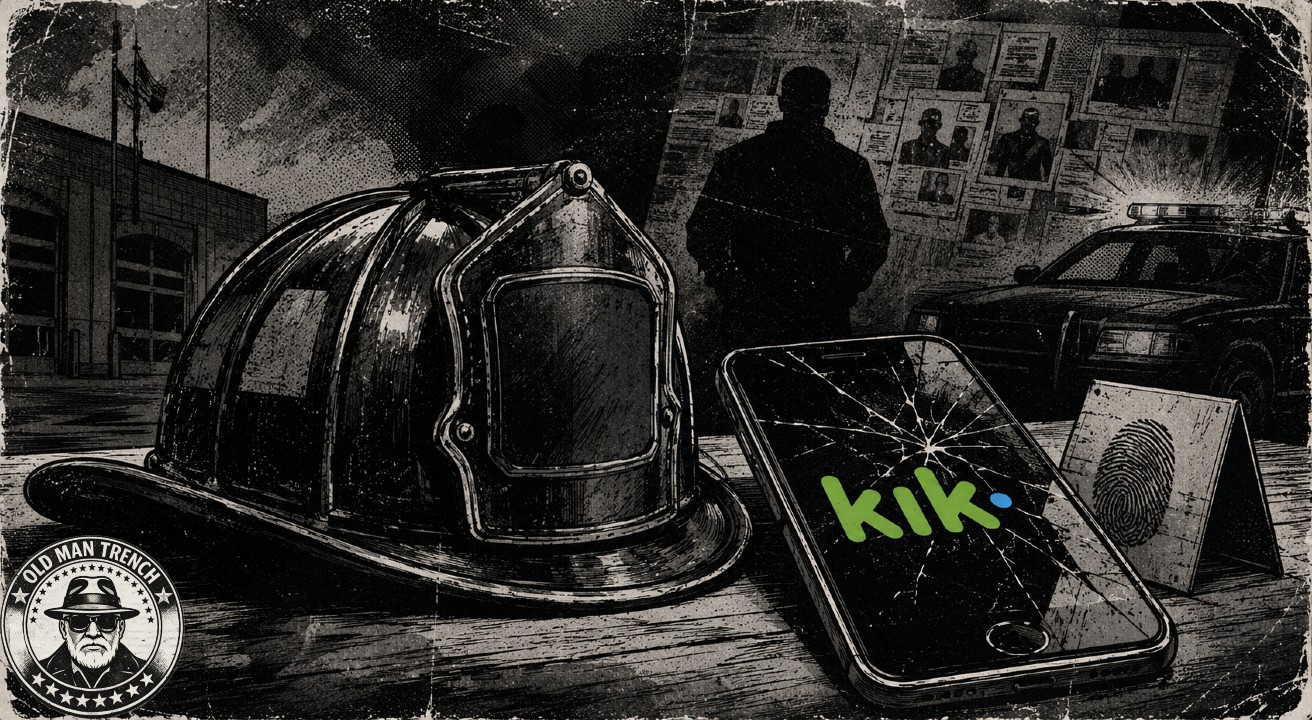
The platform involved was, of course, Kik, a messaging app that has become grimly familiar in cases involving sex offenders, pedophiles, CSAM collectors, and child traffickers. Kik allows users to operate with minimal verification, join large group chats, and share images easily, all while maintaining a level of anonymity that makes it attractive to exactly the kinds of people who should never be near a keyboard. None of this is accidental, and none of it is new. Kik keeps showing up in these cases because it works very well for people doing very bad things.
In this case, the Internet Crimes Against Children Task Force received a cyber tip indicating that someone was uploading CSAM through Kik. That account was linked directly to Crowley’s phone number and email address. Law enforcement obtained search warrants, searched his home, and seized his devices. On those devices, investigators found CSAM, evidence of distribution to other users, participation in group chats centered around CSAM, and written “erotica.” This wasn’t curiosity or a one-time lapse. This was active, repeated participation.
At sentencing, the judge noted the obvious. Crowley had earned a position of trust, wore the badge, and knew what he was doing was wrong. That part is not in dispute. The problem is what came next. Seventy-one months is the top of the guideline range, and it is still nowhere near enough. Six years in prison does not come close to accounting for the harm done, especially when the victims will live with the consequences for the rest of their lives.
It’s also worth remembering that this sentence came after prosecutors agreed to dismiss additional possession charges as part of a plea deal. What the public sees is the narrowed version of accountability, not the full scope of what was originally charged or discovered. Even stripped down, the conduct was serious. The response remains weak.
What makes this worse is that Crowley was not alone. He was one of several Minnesota law enforcement officers charged federally in a short period of time for crimes involving CSAM. Different agencies, different platforms, same pattern. And yet every time, the system treats these cases as isolated failures rather than symptoms of a deeper problem involving power, access, and institutional protection.
Law enforcement officers like Crowley are given authority ordinary people don’t have, especially those stationed at airports with federal jurisdiction, access to sensitive areas, and enormous discretion. They are trusted by default. When they commit crimes like this, it isn’t just a violation of the law. It’s a betrayal of public trust that damages entire institutions and makes accountability harder for everyone else.
If anything, people in positions like Crowley’s should be held to a higher standard, not quietly ushered through plea deals and guideline sentences that let the system declare the matter resolved. This sentence isn’t justice. It’s damage control. And as long as we keep pretending otherwise, the badge will keep protecting the wrong people.
Also, there is no evidence to indicate that the convicted was ever a drag queen.
(Sources)

Leave a Reply