


As I mentioned in my previous post about the recent school shootings in Turkey, the second shooting didn’t come out of the blue. It came one day after another attack and hit even harder. This is about the one that happened at Ayser Çalık Secondary School in Kahramanmaraş.
The suspect, a teenage student, walked onto campus carrying multiple firearms and enough ammunition to turn a school into a battlefield. The shooting started outside, then moved inside where classrooms full of kids became targets. Ten people were killed, including a teacher who reportedly tried to shield students. More were left wounded, some critically. The attacker didn’t walk away either, dying at the scene after being confronted.
Most of the English-language reporting on this case has been thin, and one of the few detailed write-ups comes from 5Pillars. That’s not a source I’d call reliable without hesitation, so everything from it should be taken with a grain of salt. At the same time, it’s one of the only places putting certain details into English, so it’s hard to ignore entirely.
According to that reporting, the shooter was identified as 14-year-old Isa Aras Mersinli. The article claims the shooter was deeply fixated on an anime character named Konata Izumi from Lucky Star. For anyone unfamiliar, Konata is a laid-back, sarcastic character from a slice-of-life comedy. She’s an “otaku” stereotype, someone obsessed with video games and anime, more interested in fandom than real-world responsibilities. In the US, we’d refer to that person as a ‘weeb.’ There’s nothing violent about the character. If anything, she exists to poke fun at people who blur the line between fiction and reality. That’s what makes the fixation more telling than the character itself.
The same report says Mersinli had been sharing their plans ahead of time with an online girlfriend. The tone described wasn’t always serious. Jokes about doing a school shooting and comments about ending up in a documentary. The kind of talk that too often gets dismissed as edgelord bullshit right up until it isn’t.
Then there’s the detail that may start to dominate the conversation. The shooter reportedly identified as non-binary.
For those who may not know, non-binary means a person doesn’t see themselves as strictly male or female. Some feel like they’re somewhere in between. Some feel like neither. It’s about identity, not behavior. That’s completely separate from something like bisexuality, which is about attraction to more than one gender. One describes who you are while the other describes who you’re into. They’re not interchangeable, even if people keep trying to treat them that way.
Within the broader LGBTQ community, non-binary people are generally accepted, especially among younger and more progressive groups. That doesn’t mean it’s seamless. Some still get treated as an afterthought or have their identity questioned, even inside spaces that are supposed to be inclusive. In the United States, acceptance has grown, but so has backlash. Visibility is higher, but so is the scrutiny. If I have any enby readers who wish to correct or add something, please feel free to do so in the comments.
Now compare that to Turkey, where there’s no legal recognition for non-binary identity at all. Gender is treated as strictly male or female under the law. Social attitudes are more conservative, and public expression of LGBTQ identity can bring real consequences, from harassment to legal trouble under vague ‘morality’ rules. Pride events have been shut down while LGBTQ activists have been targeted. For non-binary people, who already exist outside traditional categories, that means existing in a space with little legal protection and limited social understanding.
Put that together with what we know about this case, and it starts to fit a pattern that’s become hard to ignore. You have a young person dealing with identity issues in an environment that likely doesn’t accept or understand them. You have documented behavioral problems, isolation, and heavy online engagement. You also have early warning signs that didn’t stick. And you have exposure to prior mass killers, including references to Elliot Rodger.
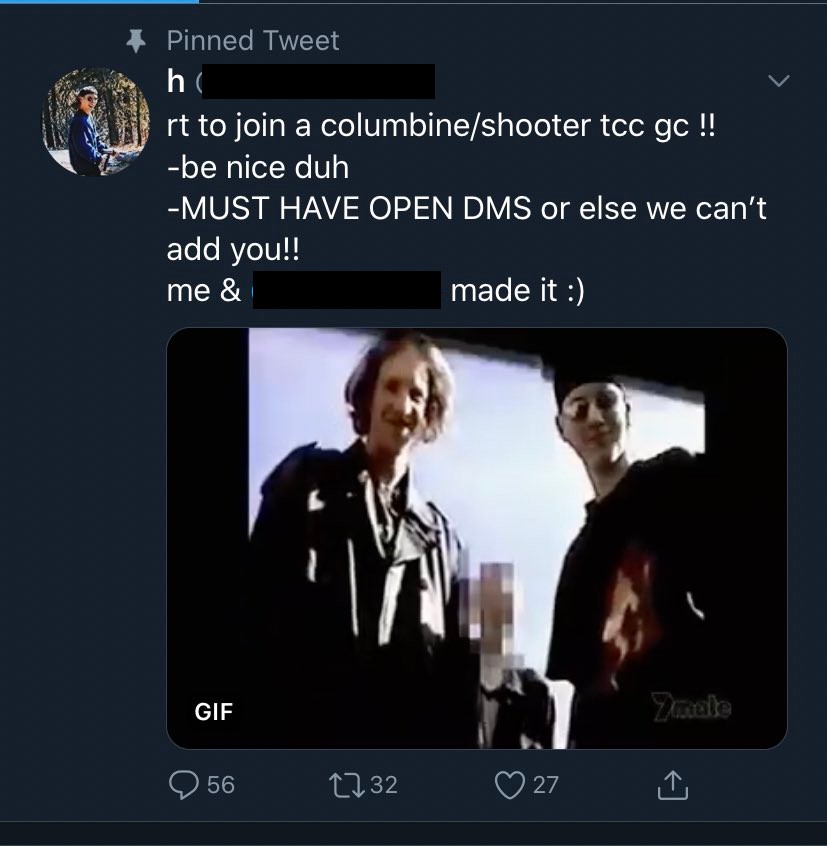
That’s where the so-called True Crime Community comes in. Not the documentaries or the podcasts people listen to on their commute, but the darker corners of the internet where killers are praised and body counts become a kind of scoreboard. Those spaces don’t create every shooter, but they provide a script for enough of them that it can’t be dismissed anymore.
Marginalized people, including those in the LGBTQ community, can be especially vulnerable to the pull of such places. When someone feels cut off from their immediate world, they go looking for belonging somewhere else. Online communities fill that gap. Sometimes that leads to support, while other times it leads somewhere much worse. When the only place someone feels seen is in a space that normalizes violence, that’s where things start to go off the rails.
Turkey’s restrictions on LGBTQ expression don’t help. If anything, they make that isolation deeper. When someone already struggling with identity has fewer safe, real-world outlets, the internet becomes the fallback, and the internet doesn’t always send teens to the best places.
None of that excuses what happened. Being non-binary or trans does not make someone a killer. Most people in those communities will never harm anyone. What it does mean is that identity alone isn’t the story, even if some outlets are trying to make it one.
That’s the other problem with the source, 5Pillars, being used here. The way the article frames the shooter’s identity feels less like context and more like implication. It reads as if being non-binary is somehow connected to the violence itself.
The reality is messier and more uncomfortable than that. This looks like another case of a young person slipping through every crack available. Identity distress, isolation, online immersion, access to weapons, and a blueprint pulled from previous killers. In this case, Turkey isn’t that different from America.
That’s what should be getting the attention. Not who the shooter said they were, but how they got to the point where they picked up a gun and followed a script we’ve seen too many times before.
(Source)


Leave a Reply