


This past Friday morning, a 14-year-old boy killed his grandparents at their home outside Bangkok with his grandfather’s own gun. He then walked into Debsirin Nonthaburi School and kept firing until five more people were dead, before turning the weapon on himself.
A 12-year-old girl who survived the initial attack died from her wounds the next day, becoming the eighth victim of a shooting that was technically already over by the time she lost her life. That’s where things stood before this weekend’s investigation started filling in the picture of who the shooter actually was in the months leading up to Friday.
Police now say the boy had been studying how to use a firearm through social media for something like a year or two before the attack, according to the deputy police commissioner. They’ve also said there’s no evidence yet that he practiced shooting anywhere. I want to take that claim at face value because I don’t think the police are lying, but I also don’t think a kid becomes the kind of shot who lands vital-area hits under stress just from watching TikTok.
I think somebody put a gun in his hands at some point and let him pull the trigger enough times to build muscle memory. And the only person we know for certain had both a working firearm and consistent access to this boy is his grandfather.
Maybe that happened at a range with a permit and a paper trail police haven’t found yet. Or maybe it happened somewhere quieter. Either way, “no evidence of practice” isn’t the same thing as “it didn’t happen.”
What actually caught my eye in this new reporting wasn’t the firearms training, though. It’s the detail that police found violent content on his personal computer, content he’d apparently been consuming online alongside all that firearms research.
That’s what lines up with something I’ve been arguing since the first post on this story, which is that this doesn’t read like a homegrown Thai tragedy so much as an import.
The affluent background, the meticulous planning, the accurate shooting, and now a documented habit of consuming violent content online. All of it fits a profile that shows up again and again in American school shooters and increasingly in the kids who admire them from a distance.
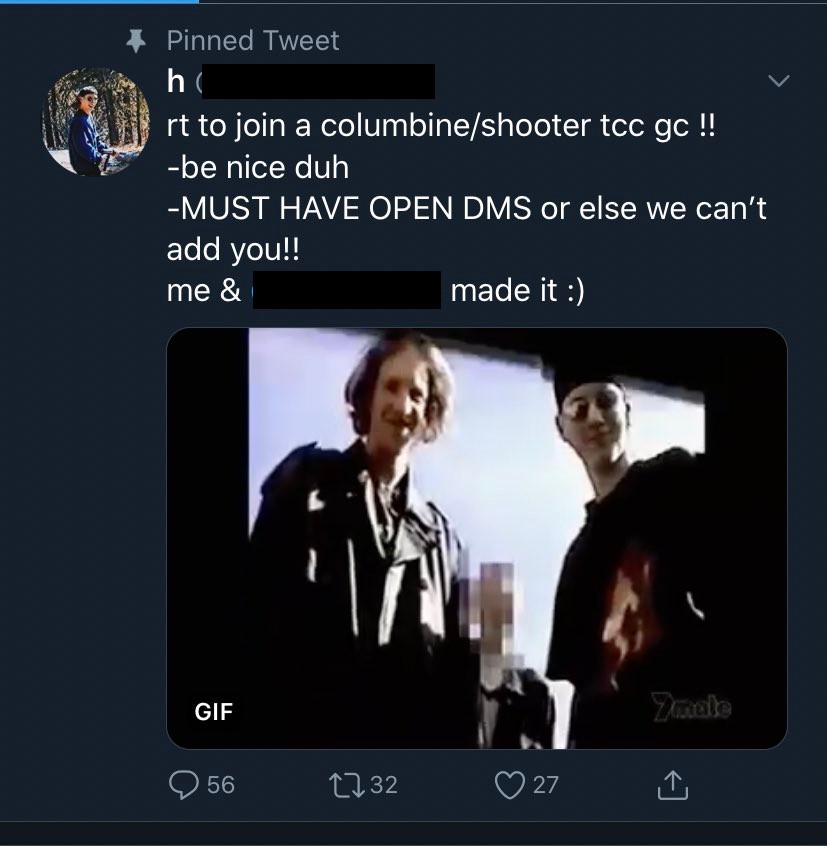
I still think the most likely source for that influence is the same one I named before, the loose online subculture some people call the True Crime Community, or TCC. It isn’t a website with a login page or a single forum you can point to. It’s a scattered, shifting network of accounts and group chats that treats mass shooters like Columbine’s Eric Harris and Dylan Klebold as celebrities instead of murderers, trading their manifestos and crime scene photos and building entire fan communities around men and women who killed children.
A significant chunk of the TCC doesn’t just stay in the fan fiction and manifesto-trading corner of things. A lot of TCC adherents end up congregating on one particular gore site that’s become infamous in true-crime circles as a place that hosts real footage and images of actual deaths and violence. No fictional gore or special effects, just the real thing cataloged and searchable. I’m not going to name it or point anyone toward it, because I refuse to give them the traffic. However it exists, it’s well known among people who are into this stuff.
It’s precisely the kind of place where a kid already spending a year or two studying how to use a gun could also be marinating in footage that makes real violence feel ordinary, even aspirational, long before he ever pulled a trigger himself.
None of this is an official motive. Police haven’t said any of it explains why he did what he did, and I’m not pretending otherwise. But between the firearms study, the violent content, and everything we already knew about how deliberately this attack was carried out, I don’t think this kid arrived at Friday morning on his own.
Somebody handed him the gun, and something handed him the script.
(Source)



Leave a Reply