


Earlier this morning, a ninth-grade student walked into a classroom at the high school attached to Ateneo de Zamboanga University in Zamboanga City in the southern Philippines and opened fire.
According to reports, the kid’s first shot was aimed at a teacher sitting at her desk, and he missed. He then moved to a second classroom where he shot and killed a fellow student. Two others were wounded before the shooter went up to the fifth floor and turned the gun on himself.
Hundreds of students were evacuated from a campus that, notably, is walled off from the university’s main grounds specifically for security reasons. None of that security mattered much when the threat was already enrolled.
This is the second school shooting in the Philippines in less than two months, following the June attack in Tacloban City that left three students dead and twenty wounded. I’ve already written about Tacloban and about the panic over the violent video game Gorebox that got banned in its aftermath, so I won’t rehash all of that here except to say the ink was barely dry on that story before this one landed.
And it’s not just a Philippines problem anymore, either. Less than ten days before this shooting, a 14-year-old in Thailand murdered his grandparents, then killed eight people and himself at his school outside Bangkok. Two countries, two attacks, ten days apart, both in Southeast Asia, both involving teenagers with easy access to firearms that belonged to someone else. That’s not a coincidence anyone should be comfortable with.
Which brings us to the guns themselves, because the chain of custody here is the part that ought to make Filipino customs officials lose sleep. The pistol used in the shooting was a .40-caliber sidearm issued by the Bureau of Customs to the shooter’s father, an agent who has since been “preventatively suspended.”
The rifle was reportedly the father’s own licensed personal firearm. So a government agency armed a man; that man kept the gun somewhere his son could get to it, and the son used a state-issued weapon to kill a classmate. The Bureau of Customs told the media that how the kid got a hold of the guns is still under investigation, which is a polite way of saying nobody wants to say out loud yet that a government-issued firearm just walked itself into a ninth-grade classroom.
The suspect livestreamed the shooting on Facebook using a body camera, and the footage has been described in language that should sound familiar to anyone who’s followed this genre of tragedy. The barrel of the gun drifts down a hallway “in the style of a first-person shooter video game” before swinging into a classroom and firing. Kids in uniform scream and run for the exit.
Police have asked the public not to share unverified clips, which is a request I’d bet money is already being ignored somewhere on the internet’s uglier corners as I type this.
Officially, nobody has announced a motive and probably won’t for a while. Unofficially, I’ve got two working theories, and I want to walk through both before I tell you which one I’m actually buying.
The first is the copycat theory, which is always in play after a high-profile school shooting. Tacloban was national news two months ago, and it is a documented pattern that major attacks generate a wave of threats, plots, and, occasionally, an actual follow-through shooting in their wake. It happens here in the States constantly. It would hardly be shocking if it happened in the Philippines too.
But I don’t think that’s what happened here, and the livestream is why. Copycats chase the headline; they want to replicate the body count or the target, not necessarily the aesthetics. What we got instead was a kid filming himself in first-person, framing his own attack like a video game.
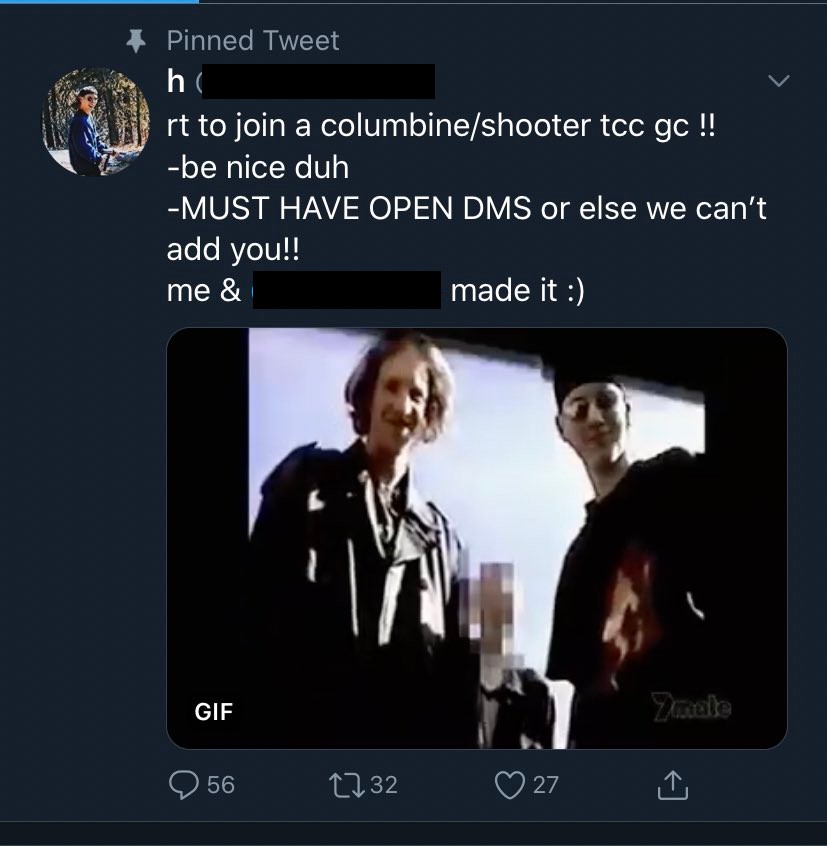
That’s not the signature of someone imitating Tacloban. That’s the signature of the so-called True Crime Community, or TCC, an online subculture I’ve written about before that idolizes school shooters and mass killers. The TCC doesn’t care about your country or your motive. It cares about the performance, and a livestreamed, first-person-shooter-style rampage is exactly the kind of performance it thrives on.
I know two shootings two months apart aren’t a trend yet. But the Philippines just had back-to-back school shootings involving teenagers, stolen family firearms, and content clearly influenced by the same online rot that’s been metastasizing in the US for years. I’m genuinely worried Southeast Asia is starting to fall into something like the grim, predictable American school-shooting schedule, where these things stop being singular tragedies and start being a recurring feature of the calendar.
If that is the case, good luck trying to get that genie back in the bottle.
(Sources)

Leave a Reply